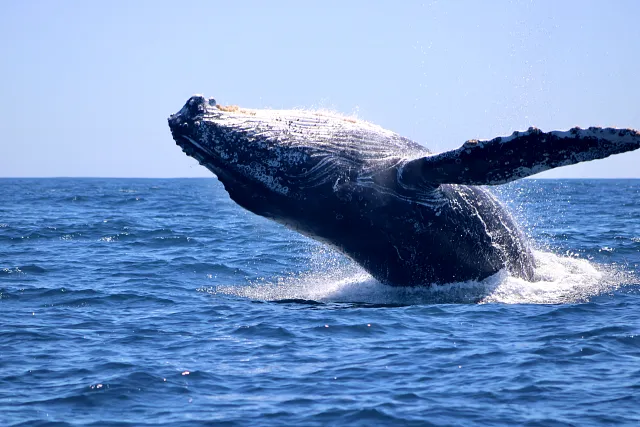
Seasonal experience · Winter
Whale Watching in Puerto Vallarta
Each winter, humpback whales return to Banderas Bay to mate and give birth. Seeing them from the water is a highlight of the season, and it comes with rules worth understanding before you book.
The season
Humpbacks in Banderas Bay, and when to look for them
Humpback whales spend the summer feeding in colder northern waters and travel south for the winter. Banderas Bay is one of the warm-water areas where they gather to mate, give birth and nurse their calves.
The whales are typically present from about December to March. The official whale-watching season is set each year by SEMARNAT, Mexico's environment ministry, in a notice published in the Diario Oficial de la Federación. For the 2025–26 season, that notice set Banderas Bay's dates from December 8, 2025 to March 23, 2026. Other seasons can differ, so we confirm the current window when you inquire.
Within the season, no one can schedule a sighting. Whales move freely and unpredictably, and they sometimes keep to areas where viewing is restricted. A good day may bring several encounters; another may bring distant blows or none at all. Whale watching in Puerto Vallarta is a chance, never a guarantee.
Authorized vessels only
Not every charter yacht can go whale watching
In Mexico, whale watching is a regulated activity. Operators need an authorization from SEMARNAT, and the vessel used must be named in it.
Under the federal standard NOM-131-SEMARNAT-2010, anyone offering whale watching must hold an authorization for that activity. It specifies the species and area, the season and the authorized vessel, and authorized vessels must display the identifying mark issued with it, in practice a flag, in a visible place while they operate.
Many yachts in a charter fleet are not authorized whale-watching vessels. That does not make them less suitable for a winter charter, but it does mean they cannot offer whale watching as an activity. When you ask us for whale watching, we arrange it only with vessels and operators authorized for the current season, and we tell you plainly if the yacht you have in mind is not one of them.
Questions worth asking before you book
- Is this vessel authorized for whale watching this season?
- Will it display the identifying flag issued with the authorization?
- Has the crew taken whale-watching training?
- How is the day planned if whales are not found nearby?
- What else does the charter include, and what is extra?
NOM-131 in plain language
The whale-watching rules, simply explained
These points summarize NOM-131-SEMARNAT-2010 as published in the Diario Oficial de la Federación. Authorities can add restrictions each season, so the captain's instructions on the day always come first.
Keep your distance
For humpbacks, vessels under 10 metres long must stay at least 60 metres away and larger vessels at least 80 metres. Boats waiting their turn hold back 240 metres.
No crowding
No more than four vessels may stay around the same whale or group of whales. Any others wait at the waiting distance.
A time limit
In authorized viewing areas, a vessel may stay with the same whale or group for a maximum of 30 minutes.
Slow and from the side
Speeds drop in the presence of whales. Travelling whales are approached diagonally from the side and behind, never head-on, and vessels avoid sudden acceleration.
Hands off
No touching, feeding or harassing whales, no blocking their path and no coming between a mother and her calf. Nothing is thrown into the water.
Stay out of the water
Swimming, diving and fishing are not allowed during whale watching, and kayaks, jet skis and similar small craft may not be used to approach whales.
If a whale comes to you, the standard asks the vessel to stay in neutral with the engine running, wait for the whale to move away and then leave slowly. If whales show signs of disturbance, such as sudden changes of direction or longer and longer dives, vessels must move off at low speed.
Each season's notice can also close specific areas. The 2025–26 notice, for example, ruled out whale watching in a ring of water around the Marietas Islands and in a coastal strip running from Punta Mita to the mouth of the Ameca River, where mothers and calves concentrate.
Rules like these are why a whale-watching day can feel unhurried, with long pauses and careful positioning. That patience is what keeps the whales coming back.
On the water
What an encounter can look like
Every encounter is different. These are behaviors visitors hope for, none of which can be promised.
- Blows: the spout of breath that often gives away a whale's position from far off.
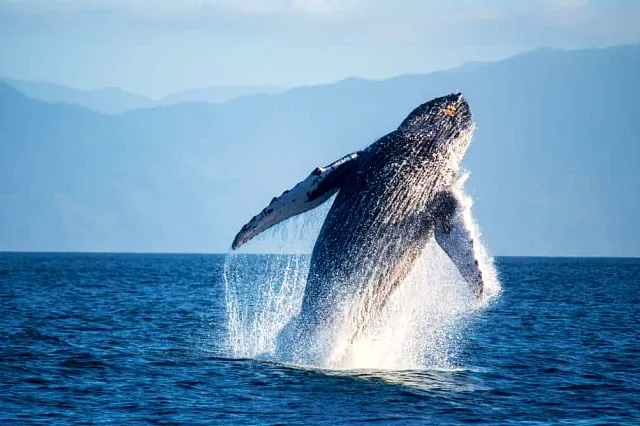
- Breaching: a whale launching much of its body clear of the water.
- Tail and fin slaps: loud splashes as whales strike the surface.
- Mothers and calves: often moving slowly together, and given extra protection under the rules.
- Song: males sing during the breeding season; if the operator carries a hydrophone, you may be able to listen.
Encounters can be brief or long, distant or close, but always on the whale's terms. A good crew explains what you are seeing and when it is time to move on.
Best practice
Being a good guest around whales
The rules bind the vessel. These habits are how guests help.
Listen to the briefing
Authorized operators are required to brief guests at the start of each trip on how to behave around whales. Follow it, and the crew's calls on the day.
Keep it quiet
Turn the music down during an encounter and keep voices low. Calm on deck makes for calmer, longer sightings.
Stay where the crew asks
Whales surface unpredictably. Keep a hand free, stay seated when asked and move around only when the vessel is steady.
Photograph, don't chase
Use a zoom lens or simply watch. The best moments come when the boat waits rather than pursues.
Nothing overboard
No food, drinks, trash or objects in the water. Secure hats and napkins before the wind takes them.
Accept the quiet days
If whales are resting, with a calf or in a restricted area, the right call is to give them space, even if it means a calmer trip.
Beyond whales
Other wildlife you might meet
Banderas Bay supports plenty of marine life year-round. These are possibilities, never promises.
Dolphins
Dolphins are seen in the bay at different times of year, sometimes riding a boat's bow wave. The same courtesy applies: no chasing, feeding or swimming with them.
Rays and turtles
Rays sometimes leap clear of the surface, and sea turtles may be spotted surfacing to breathe. Give them room and let them go on their way.
Seabirds
Pelicans, frigatebirds and boobies are often seen along the coast and around the islands, especially where fish are close to the surface.
Outside whale season, or on a yacht that is not authorized for whale watching, wildlife is simply a welcome bonus. If a humpback surfaces near any vessel, a responsible crew slows down, keeps its distance and lets the whale move on.
Planning
How to plan a whale-season charter
Check the season
Share your dates. We confirm whether they fall within the official season published for that year.
Ask for authorized options
We identify vessels and operators authorized for whale watching that season and explain what each includes.
Keep expectations open
Think of the day as time on the water with a chance of whales, not a scheduled show.
Dress for the wind
Winter breezes on the water can feel cool. Bring a light layer, sun protection and binoculars if you have them.


Private charter request
Planning a winter charter?
Tell us your dates and group. We check the official season and which authorized vessels can take you whale watching, and say so plainly if a yacht cannot.
Questions & answers
Whale watching questions
Straight answers to the questions guests ask most. Anything not covered here is confirmed in writing when you inquire.
When is whale season in Puerto Vallarta?
Humpback whales are typically in Banderas Bay from about December to March. SEMARNAT sets the official whale-watching season each year; for 2025–26 it ran from December 8, 2025 to March 23, 2026, and we confirm the current dates when you inquire.
Are whale sightings guaranteed?
No. Whales are wild animals that move freely, and some days bring several encounters while others bring none. We describe whale watching as a chance, never a promise.
Do we need a specially authorized boat to go whale watching?
Yes. Under NOM-131-SEMARNAT-2010, whale watching requires an authorization from SEMARNAT, and only authorized vessels may offer it. We arrange whale watching only with vessels and operators authorized for the current season.
How can we tell whether a boat is authorized for whale watching?
Authorized vessels must display the identifying mark issued with their authorization, in practice a flag, in a visible place while operating. You can also ask us to confirm the vessel's authorization for the season before you book.
How close can a boat get to a humpback whale?
Under NOM-131, vessels under 10 metres long must stay at least 60 metres from a humpback, and vessels of 10 metres or more at least 80 metres. Boats waiting to observe stay 240 metres away, and no more than four vessels may be around the same whale or group.
Can we swim or snorkel with the whales?
No. Swimming and diving are not permitted during whale watching, and neither is touching, feeding or approaching whales in kayaks, jet skis or similar small craft.
How long can a boat stay with a whale?
Up to 30 minutes with the same whale or group in authorized viewing areas, according to NOM-131. After that, the vessel moves on so the animals are not disturbed for long periods.
What happens if a whale swims up to our boat?
The vessel stays in neutral with the engine running, waits for the whale to move away and then leaves slowly, without sudden acceleration. Enjoy the moment from the deck and follow the crew's instructions.
Are some parts of the bay closed to whale watching?
Yes. Each season's official notice can set restricted zones. The 2025–26 notice closed waters around the Marietas Islands and a coastal strip from Punta Mita to the mouth of the Ameca River to whale watching, to protect mothers and calves.
Can we combine whale watching with snorkeling or a beach stop?
Sometimes, depending on the authorized vessel, the charter length and the conditions. Swimming is never part of a whale encounter itself, so any snorkel or beach stop is planned as a separate part of the day.
What other wildlife might we see on a winter charter?
Dolphins, rays, sea turtles and seabirds such as pelicans and frigatebirds are sometimes seen in Banderas Bay. Like the whales, they are a possibility rather than a promise.
Can a large group go whale watching together?
It depends on which authorized vessels are operating that season and how many guests each can carry. A large group may need a bigger authorized vessel or more than one boat; we check the options for your date.
What should we bring for whale watching?
A light layer against the wind, sun protection, a hat that will not blow away, and binoculars or a zoom lens if you have them. If you are sensitive to motion, consider a seasickness remedy before you board.